THE RISE OF THE ROYAL ALAKĒŚVARAS
THE HOUSE OF ALAKĒŚVARA
(c. 1300 – 1505 CE)
From Merchant Princes and Royal Ministers to Sovereign Rule
The medieval Alakēśvara epoch represents the transformation of the Alakēśvara family from a powerful merchant-princely and aristocratic lineage into a ruling dynasty of late-medieval Sri Lanka. Rising within the political world of the Gampola kingdom through commerce, royal service and military command, successive members of the family became royal ministers, commanders and territorial rulers before members of the dynasty ultimately exercised sovereign authority in their own right. They controlled strategic territory in southwestern Sri Lanka, commanded armies, developed and fortified Jayawardenepura Kotte, Sri Lanka and became central actors in the political transition from Gampola to Kotte.
The Alakēśvara family appears under several forms of its name in historical records and modern scholarship, including Alakēśvara, Alakesvara, Alakeshvara, Alakeshwara, Alagakkonara and Alagakonara. These variants refer to the lineage whose political ascent became one of the defining developments in the history of southwestern Sri Lanka during the fourteenth and early fifteenth centuries.
The late thirteenth and early fourteenth centuries formed a period of intense political change across South India, Sri Lanka and the wider Indian Ocean. Within this environment, the lineage recorded in Sri Lankan sources under forms of the name Alagakonara emerged as an increasingly important aristocratic, commercial and political force. Inscriptions, literary works and chronicles preserve elements of this history, while the family's subsequent political trajectory becomes increasingly visible through royal government, military command, territorial authority and the development of Kotte.
By the late fourteenth century, the Alakēśvara family had moved beyond the conventional position of court aristocracy and royal ministry. Successive Alakēśvaras accumulated military, territorial and governmental authority, culminating in members of the dynasty exercising sovereign power. Vira Alakēśvara represents the culmination of this political ascent: a ruler whose authority over the southwestern polity brought the Alakēśvara dynasty into direct confrontation with Ming China.
The Alakēśvara story is therefore best understood as a progression. The family did not enter Sri Lankan history simply as an established reigning dynasty. Its political ascent occurred across generations: from mercantile wealth and aristocratic standing, through royal service and the highest offices of government, to military command, territorial rule and ultimately sovereign authority.
Descriptions of individual Alakēśvaras as merchant princes, royal ministers, military commanders, territorial rulers and sovereigns describe successive stages in the political development of the same family.
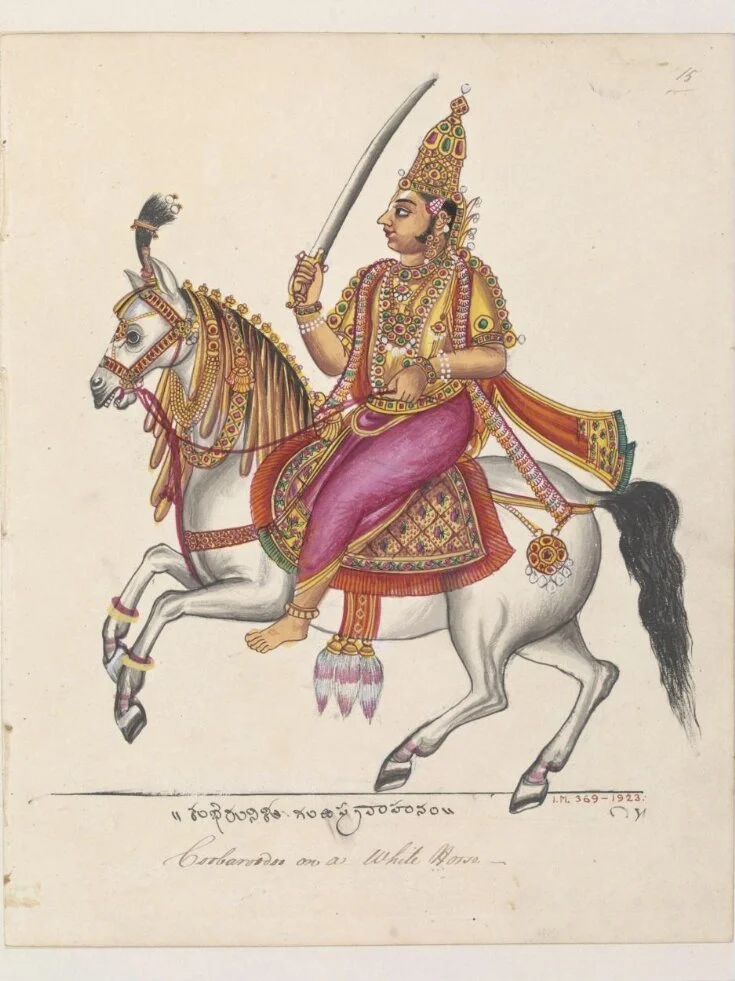
Kubera, the God of Wealth and Guardian of the North, Riding on a Horse, c. 1825. Gouache on watermarked paper, Trichinopoly (Tiruchirappalli), South India. Victoria and Albert Museum, London, Accession No. IM.369-1923. Image courtesy of the Victoria and Albert Museum, London.
The Alakēśvaras as a Ruling Dynasty
The Alakēśvaras became a ruling family of late-medieval Sri Lanka whose authority developed from commerce and royal service into military command, territorial government and sovereign rule. Their political importance cannot therefore be understood solely through the offices that earlier members held within the Gampola political order.
Modern scholarship has increasingly examined the Alakēśvaras not merely as ministers or subordinate officials of the Gampola kings, but as rulers and state-builders whose authority centred upon the strategically important southwestern region associated with Raigama and Jayawardenepura Kotte. Their accumulation of territory, military resources, revenue and administrative authority progressively changed their political position.
This distinction is fundamental to understanding the sovereign Alakēśvaras. Their earlier service to existing monarchs does not contradict their subsequent sovereign status. It explains how that status developed.
Commerce, Power and the Indian Ocean
The Alakēśvara family emerged within a world in which trans-oceanic commerce, maritime mobility, territorial defence and court politics were closely interconnected. Unlike aristocratic power based exclusively upon inland agrarian estates, Alakēśvara authority developed within the commercially important southwestern region of Sri Lanka. Control of territory and access to ports, trade routes and revenues placed the family at the intersection of political authority and Indian Ocean commerce.
The southwestern coast possessed exceptional strategic value. Cinnamon, gemstones and other high-value commodities connected the island to commercial systems extending across South India, the Islamic trading world, Southeast Asia and China. Political authority over the approaches to this region consequently possessed importance extending beyond the internal politics of the island.
The Alakēśvaras' rise took place within this wider commercial environment. Their history illustrates the close relationship between wealth, military capacity, territorial government and political authority in the medieval Indian Ocean.
South Indian Origins and the Maritime World
Traditions concerning the South Indian origins of the Alagakonara lineage have frequently been situated within the wider commercial world of the Malabar coast and the historic Chera regions. The precise genealogy of these early connections should be distinguished from the better-documented Sri Lankan political history of the family. Nevertheless, the wider environment from which the lineage is traditionally understood to have emerged belonged to one of the oldest maritime trading regions of the Indian Ocean.
The historic Chera and Malabar regions contained major ports, including the celebrated emporium of Muziris, which connected South India with commercial networks extending through the Red Sea and Mediterranean world. Classical sources including the Periplus of the Erythraean Sea and Pliny the Elder testify to the importance of pepper, gemstones, textiles and other commodities moving through these networks. Archaeological evidence, including Roman coin finds in South India, further demonstrates the scale and longevity of these commercial relationships.
During later centuries, powerful South Indian merchant organizations such as the Ayyavole Five Hundred and Manigramam illustrate the institutional sophistication and geographical reach of the commercial environment in which trans-regional merchant elites operated. The importance of this background lies not in assuming a direct institutional continuity that the surviving evidence cannot independently demonstrate, but in understanding the commercial and political world from which mobile aristocratic and merchant families could emerge.
When the ancestral Alakēśvara lineage became established in Sri Lanka, it entered another strategic centre of the Indian Ocean system. Its subsequent history demonstrates the capacity to convert commercial resources, courtly influence and military organization into territorial and ultimately sovereign authority.

Personification of India. Roman mosaic, early 4th century CE. Villa Romana del Casale, Piazza Armerina, Sicily, Italy. Photograph by Jerzy Strzelecki, via Wikimedia Commons (CC BY-SA 3.0).
Dynastic Alliance and the Giri Tradition
Genealogical traditions associated with the Alakēśvara family connect the medieval lineage with the established Giri tradition through marriage and political alliance at Raigama.
Within these traditions, this relationship represents the convergence of Alakēśvara commercial, military and political power with an older Sri Lankan aristocratic and sovereign tradition. Such dynastic alliances belonged to a wider political culture in which marriage, kinship and hereditary legitimacy could play important roles in consolidating authority.
The genealogical traditions surrounding the Giri relationship should, however, be distinguished from the more directly documented political record of the fourteenth and early fifteenth centuries. It is within that later record that the Alakēśvaras' political rise becomes clearest. Leading members occupied the highest levels of royal government, accumulated military and territorial authority, established powerful political centres and ultimately progressed beyond royal ministry to the exercise of sovereign power.
From Ministerial Office to Sovereign Power
The ascent of the sovereign Alakēśvaras occurred across generations rather than through a single event. Leading members first became prominent through wealth, aristocratic standing and royal service. Their influence subsequently expanded through the accumulation of ministerial authority, military command and territorial power in southwestern Sri Lanka.
This progression is essential to understanding the family's historical position. The Alakēśvaras did not occupy a single, static constitutional role throughout their history. Their authority changed as the political structure of late-medieval Sri Lanka changed around them. Royal office provided access to government. Military command provided coercive authority. Territorial control provided an increasingly independent geographical basis of power. The combination of these functions progressively transformed a powerful ministerial lineage into a ruling dynasty.
Nissanka Alakēśvara and the creation of Kotte
Nissanka Alakēśvara stands among the most consequential figures in this transformation. Associated with the development and fortification of Jayawardenepura Kotte, he helped establish a powerful defensive and political centre in the southwest. The location was strategically significant, protecting approaches to the commercially important western region while providing a fortified base from which political and military authority could be exercised.
Kotte was therefore more than a fortress. Its development represented the territorial expression of expanding Alakēśvara power. Military authority, administration, defence and control of strategic geography were increasingly concentrated around a political centre associated with the family.
The development of Kotte consequently marks an important stage in the Alakēśvara ascent: the transition from exceptional influence within an existing royal order toward increasingly autonomous territorial government. The importance of this achievement extended beyond the family's own period of supremacy. Kotte survived the political decline of direct Alakēśvara rule and subsequently became the capital of the kingdom that emerged as the dominant political power of fifteenth-century southwestern Sri Lanka.
As Alakēśvara military and territorial authority expanded, the political position of the family changed. Earlier members can accurately be described through their positions as royal ministers and military commanders. Later Alakēśvaras exercised a combination of territorial, fiscal, administrative and military powers that increasingly amounted to autonomous government.
By the period of Vira Alakēśvara, the family was no longer adequately described simply as a lineage of merchant princes or royal ministers. Members of the dynasty had become territorial rulers exercising the functions of sovereign government. This progression explains why historical sources and later scholarship can employ different terminology for the Alakēśvaras. The terminology reflects different generations and different stages of political development. The contradiction between ministerial and royal status therefore disappears when the history is read chronologically.
The Ming-Kotte War (1410–1411): Resistance to Chinese Hegemony
The Confrontation
The Alakēśvara court, operating from their highly fortified maritime centers, recognized that the Ming Empire's intervention was an immediate challenge to their sovereign trade model. The dynasty was immensely wealthy, operating a state-backed commercial monopoly over southwestern coastal ports that controlled the supply of cinnamon, gems, and pearls to Venice, Mamluk Egypt, and the Far East. Surrendering to the Ming tribute system meant bowing to a foreign superpower's terms, which would disrupt their independent customs tariffs on international shipping.
When Admiral Zheng He landed with a massive contingent, the ruling patriarch, Vira Alakēśvara, executed an aggressive tactical maneuver. He lured Zheng He and 2,000 Chinese troops overland into Kotte, attempting to cut them off from the Chinese treasure fleet anchored at Colombo. In a high-stakes counter-assault, Zheng He bypassed the main army and raided the capital city directly, capturing Vira Alakēśvara, his family, and principal officials.
The encounter provides a striking international marker of the family's political ascent. A lineage associated with commerce and royal service had become a dynasty exercising sufficient territorial and governmental authority to enter directly into the geopolitical history of Ming China's Indian Ocean expeditions.
The Geopolitical Legacy
The defeat and capture of Vira Alakēśvara brought the principal phase of direct Alakēśvara sovereign supremacy to an end. It did not, however, erase the political geography created during the family's ascendancy.
Jayawardenepura Kotte endured.The fortified political centre developed under Alakēśvara authority subsequently became the capital of the Kingdom of Kotte. The infrastructure of government and defence associated with the Alakēśvara political project therefore survived the dynasty's own period of direct supremacy.
This constitutes one of the family's most important historical legacies. The significance of the royal Alakēśvaras consequently extends beyond the career of any individual ruler. Their rise contributed to the movement of political power toward southwestern Sri Lanka. Their military organization strengthened the defence of the region. Their development of Kotte helped establish the political centre around which the subsequent kingdom developed.
Their confrontation with Ming China also connected the island's internal political history directly with the wider geopolitics of the fifteenth-century Indian Ocean. The Alakēśvaras were therefore not simply participants in the Gampola–Kotte transition.They were among the political forces that materially shaped it.
.
One of the most extraordinary episodes of the Alakēśvara epoch occurred when the ruling authority of southwestern Sri Lanka came into direct confrontation with Ming China. The conflict provides important international evidence for understanding the political position the Alakēśvaras had attained.
By the opening decades of the fifteenth century, Vira Alakēśvara exercised ruling authority over the strategically important southwestern polity associated with Kotte. The family's earlier progression from royal service through military and territorial government had culminated in political authority capable of acting in its own right. At the same time, Ming China was projecting unprecedented diplomatic, commercial and military power across the Indian Ocean.
During the great maritime expeditions sponsored by the Yongle Emperor, Admiral Zheng He's fleets travelled through Southeast Asia and across the Indian Ocean, establishing relationships with rulers, ports and political communities throughout maritime Asia and the western Indian Ocean. Sri Lanka occupied an important position within this expanding network.
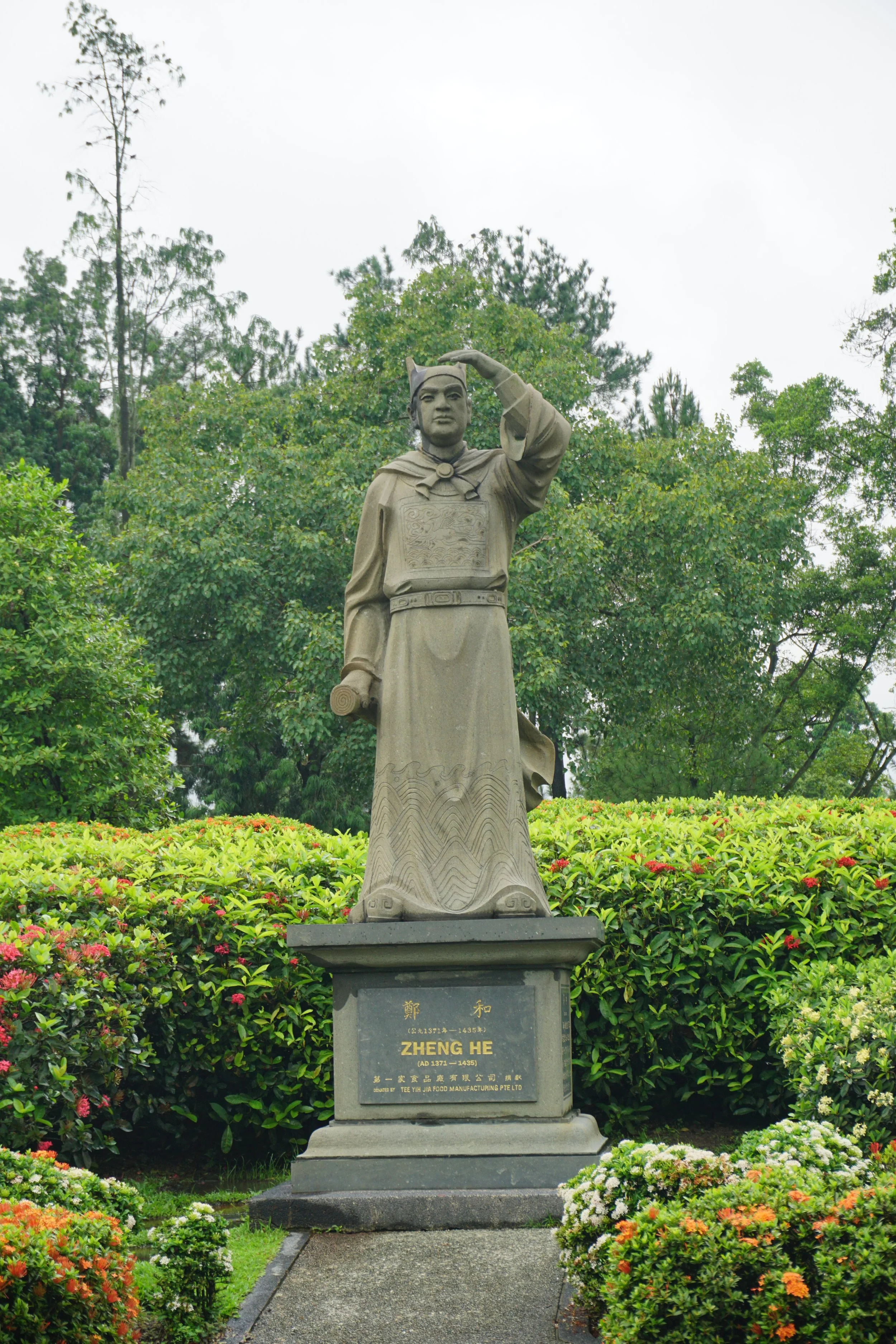
Statue of Zheng He (1371–1435), Chinese Garden, Singapore. Photograph by Anandajoti Bhikkhu, via Wikimedia Commons. Licensed under Creative Commons Attribution 2.0 (CC BY 2.0).
The Age of Coastal Land grants (1412–1505 CE): The Post-Sovereign Realignment
The political changes that followed the Ming intervention marked the end of the principal phase of direct Alakēśvara sovereign dominance at the political centre. They did not mark the disappearance of the wider aristocratic, territorial and familial networks that had developed during the family's rise.
As political authority consolidated under the emerging Kotte crown, branches of the southwestern aristocracy became increasingly associated with territories extending outward from the immediate political centre and along the southwestern coastal corridor.Family genealogies, hereditary names, land traditions and later documentary records associate ancestral branches of the later De Alwis family with the southwestern region extending through Moratuwa, Panadura, Kalutara, Bentota, Pitiwala and neighbouring districts.
The reconstruction of this later history requires a different evidentiary method from that used to establish the political history of the medieval Alakēśvaras. The medieval political record can be examined through chronicles, inscriptions, literary sources and international records. The reconstruction of later family continuity requires the combined study of genealogy, landholding, hereditary names, kinship networks, Sannas traditions and surviving documentary records.
These different forms of evidence should therefore be considered together while remaining clearly distinguished.
The Realignment: Dispersal and Preservation
The political changes following 1411 produced a broader realignment of aristocratic authority within southwestern Sri Lanka. Family and regional traditions associate branches of the former Alakēśvara political network with territories farther along the southwestern coast, including Pitiwala, Kalutara and Moratuwa.
Sovereign land grants, including traditions surrounding Sannas, became important mechanisms through which property, privilege and territorial relationships could be preserved and transmitted.
The post-sovereign period should therefore be understood differently from the preceding age of direct Alakēśvara political supremacy.The historical trajectory shifted from sovereign political authority toward forms of landed, administrative and commercial influence capable of surviving under changing political systems.
Hereditary house designations and family names form another component of this reconstruction. Names including Alahakoon, which genealogical and linguistic traditions have associated with forms of the earlier Alagakonara identity, and Wijesiriwardana form part of the evidence considered in tracing the later history.
Names alone, however, cannot establish genealogical continuity. Their significance must be assessed alongside documentary, territorial and kinship evidence.
The Role of the Sannas Chief Registrars
The preservation of land grants, genealogical traditions and hereditary identities became increasingly important as political authority changed.
Within family historical traditions, registrars and custodians associated with Sannas records played an important role in preserving documentary knowledge concerning estates and hereditary rights.
These traditions form part of the wider evidentiary record through which the transition from medieval political authority to the landed and administrative structures visible in later centuries can be examined.
Property in this context was more than an economic asset. Estates, hereditary identities, family relationships and documentary records could collectively preserve social position across political transitions.
These mechanisms of preservation form part of the proposed bridge between the medieval Alakēśvara epoch and the better-documented coastal aristocratic and commercial families of subsequent centuries.
From the Alakēśvara Epoch to the De Alwis Era
The end of direct Alakēśvara sovereign rule did not mark the end of the family history reconstructed by this archive.The subsequent chronology examines the proposed continuity from the medieval Alakēśvara lineage through the landed and administrative families of southwestern Sri Lanka and ultimately into the documented De Alwis family of the colonial and modern periods.
This reconstruction is based upon the combined study of genealogy, hereditary names, kinship networks, territorial continuity, land traditions and surviving documentary records. The evidentiary basis for each stage is examined separately throughout the archive so that documented history, genealogical reconstruction and inherited family tradition can be distinguished rather than conflated.
The transition is historically significant because the political environment itself was changing.
The forms of authority associated with a medieval ruling dynasty could not remain static through the emergence of the Kotte kingdom and the subsequent arrival of European maritime powers. Later family history therefore belongs to a different institutional world: one increasingly shaped by landed property, commerce, colonial administration, professional service and adaptation to successive regimes.
By the beginning of the sixteenth century, this post-sovereign history entered a fundamentally different phase. The arrival of the Portuguese in 1505 transformed the political and commercial order of the southwestern coast. The next epoch follows the family's adaptation through Portuguese and Dutch rule and the emergence of the documented De Alwis identity within the coastal aristocracy.
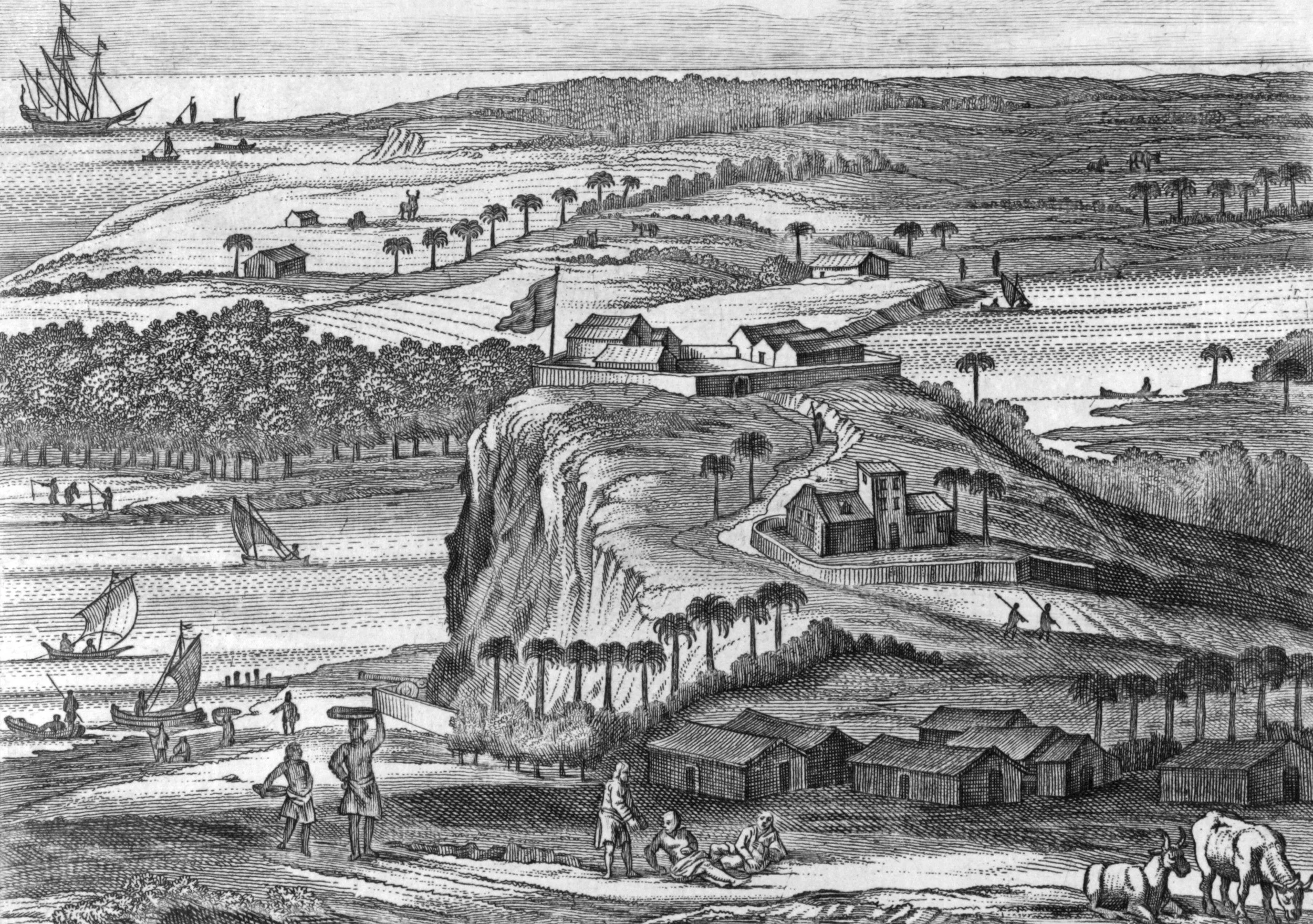
The Fortress of Kalutara, Sri Lanka. Engraving published in Philippus Baldaeus, A True and Exact Description of the Great Island of Ceylon (1672). Reproduced via Alamy Stock Photo (Image ID: 2Y5959P).
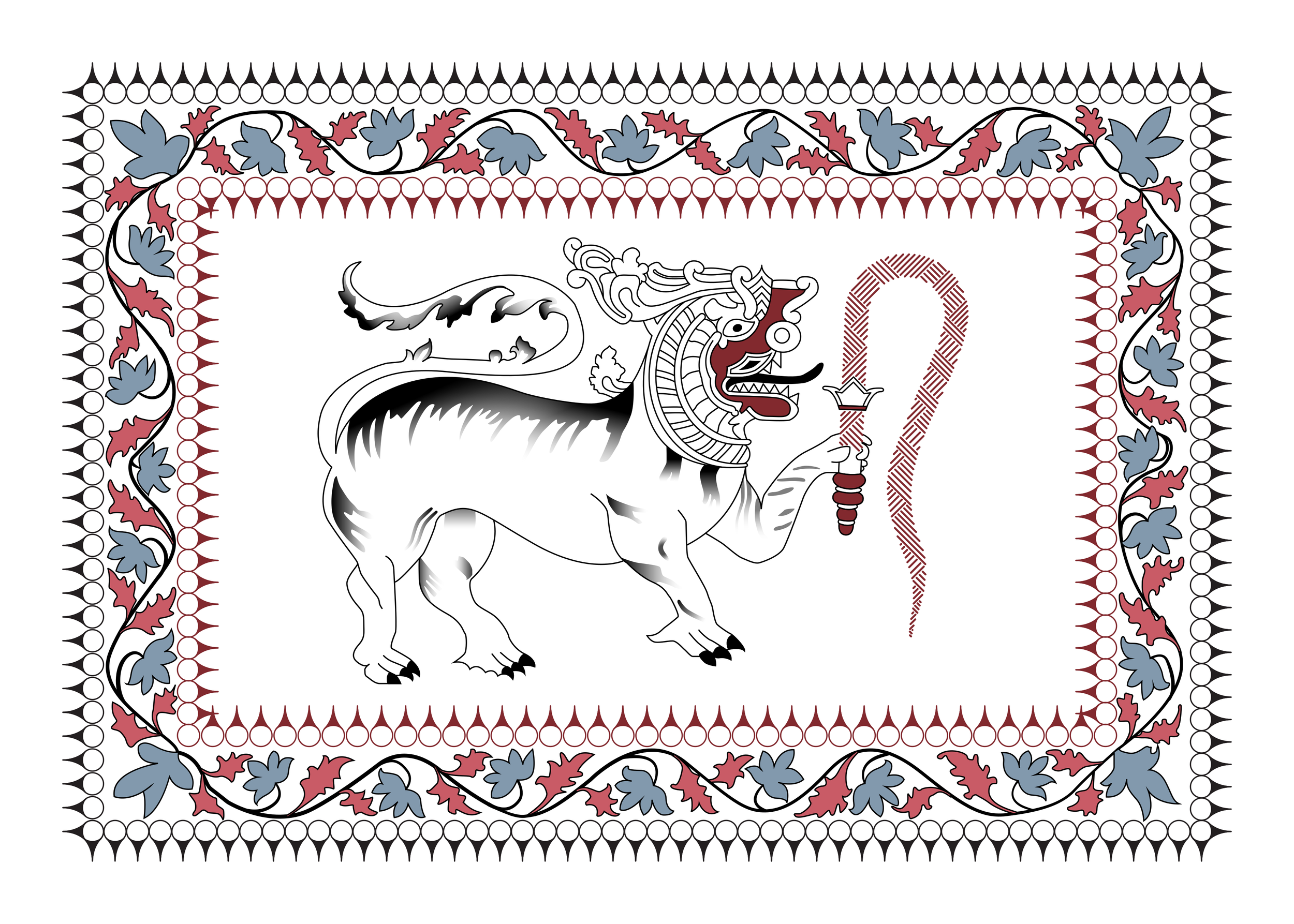
Sovereigns, Rulers & Statesmen of the Alakēśvara Epoch
Flag of Sri Jayawardenepura Kotte, , c. 1412–1597. Digital illustration. Shutterstock, Image ID 2691481447.
-
Chief Minister, Military Leader and Builder of Kotte
Nissanka Alakēśvara stands among the principal architects of the family's political ascendancy. His association with the development and fortification of Jayawardenapura Kotte represents a decisive stage in the movement of Alakēśvara power from royal service toward territorial government. The fortified centre provided both a defensive position and an enduring political geography for southwestern Sri Lanka.
His historical significance therefore extends beyond the office he occupied. The concentration of military, territorial and administrative authority associated with his period helped establish the structural foundations from which later Alakēśvara rulers exercised increasingly autonomous power.
-
Alakēśvara Statesman and Military Leader
Veerabahu Apana belonged to the generations in which Alakēśvara authority became increasingly embedded within the military and governmental structures of southwestern Sri Lanka. His place within the chronology illustrates the progressive concentration of political authority that characterized the family's ascent during the later fourteenth century.
The importance of figures such as Veerabahu lies partly in demonstrating that the rise of the Alakēśvaras was not the achievement of a single individual. It developed across generations as successive family members accumulated offices, military resources, territorial authority and political influence.
-
Sovereign Ruler of the Alakēśvara Dynasty
Vira Alakēśvara represents the culmination of the family's medieval political ascent. By his period, Alakēśvara authority had progressed beyond royal ministry and territorial administration to the exercise of sovereign power. His government controlled the southwestern polity and confronted Ming China during the great maritime expeditions of the early fifteenth century.
His defeat, capture and transportation with members of his household to the Ming imperial court made the Alakēśvara dynasty part of the documented international political history of the period. Vira Alakēśvara therefore occupies a particularly important position in understanding the royal status ultimately achieved by the family. His career represents the final stage of a progression that had begun generations earlier with commerce, aristocratic standing and royal service.
-
Custodians of the Post-Sovereign Territorial Record
Within later family traditions, the preservation of land grants and hereditary records became an important mechanism through which territorial identity and dynastic memory survived political change. Traditions concerning registrars and custodians of Sannas records consequently belong to the evidentiary bridge between the medieval epoch and later coastal history.
These traditions should be considered alongside surviving documentary and genealogical evidence as part of the wider reconstruction of the post-sovereign family history.