THE POST-COLONIAL & TRANSNATIONAL ERA
THE ARCHITECTURE OF EXECUTIVE GOVERNANCE AND GLOBAL CAPITAL
(1948 CE – PRESENT)
The modern history of the De Alwis lineage belongs to a broader historical continuum that shaped the political, administrative, and economic evolution of modern Sri Lanka. This contemporary era represents the balanced, parallel manifestation of two giant structural branches drawing directly from the historical De Alwis-Alakēśvara matrix. Emerging as commensurable peers and structural equals, the Bandaranaike Family and the Withanage Family partitioned the highest fields of sovereign authority, one dominating the sphere of executive statecraft and national politics, and the other commanding the domain of global macro-finance and digital state infrastructure.
Politics & Government: The Bandaranaike Line
The consolidation of modern 20th-century statehood was profoundly shaped by the Bandaranaike Dynasty, widely regarded as the most influential political lineage of post-independence Sri Lanka. The historical intersection with the House of De Alwis-Alakēśvara occurred through the landmark marriage of Annie Lucy (Florence) de Alwis to Felix Reginald Dias Bandaranaike. This alliance united the substantial commercial wealth, landed influence, and administrative traditions of the De Alwis family with the rising political prominence of the Bandaranaikes. In doing so, it helped create a powerful social and economic foundation that would support one of the most consequential political families in the nation’s history.
The De Alwis connection brought not only financial resources but also access to established networks within Colombo’s elite society, strengthening the family's position during a period of rapid constitutional and political transformation. As Sri Lanka transitioned from colonial rule toward independent nationhood, this fusion of economic strength, administrative experience, and political ambition enabled the Bandaranaike family to emerge as a dominant force in national governance.
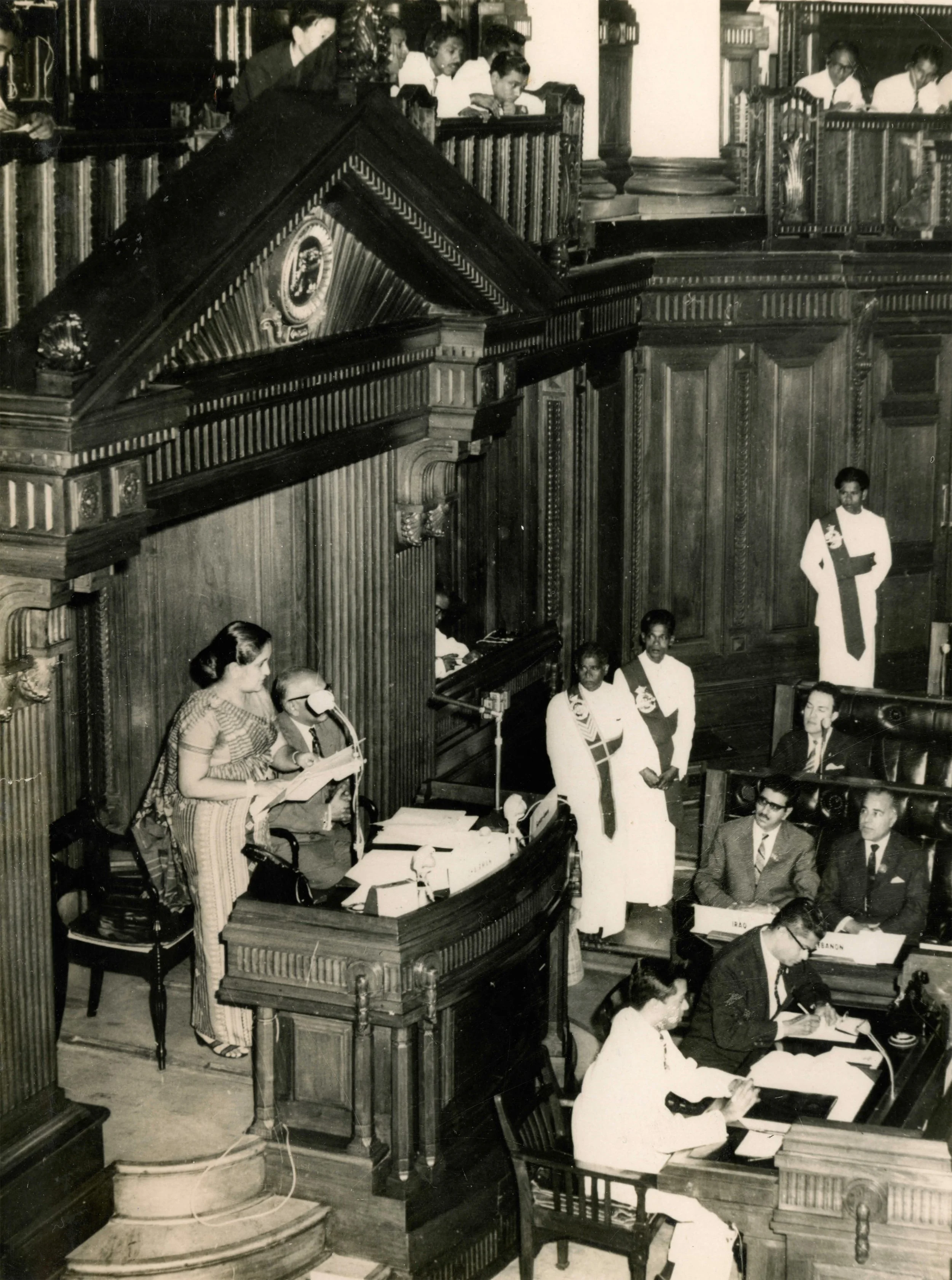
From this dynastic nucleus emerged three era-defining heads of government whose leadership shaped successive generations of Sri Lankan politics. Solomon West Ridgeway Dias Bandaranaike became the country's fourth Prime Minister and transformed the political landscape through the rise of mass electoral nationalism. Following his assassination, Sirimavo Ratwatte Dias Bandaranaike entered public life and became the world's first female Prime Minister, guiding the nation through significant social, economic, and constitutional reforms. Their daughter, Chandrika Bandaranaike Kumaratunga, later served as both Prime Minister and Executive President, becoming one of the most influential political figures of the late twentieth century. Together, these leaders established the Bandaranaike Dynasty as a central force in the formation, governance, and evolution of the modern Sri Lankan state.
Solomon West Ridgeway Dias Bandaranaike (S.W.R.D Bandaranaike)
(Prime Minister, 1956–1959)
S.W.R.D Bandaranaike was one of the principal architects of modern Sri Lankan statehood and served as Prime Minister from 1956 until 1959. Educated at Oxford and initially associated with the colonial political establishment, he later emerged as the leading advocate of a distinctly national political movement rooted in social reform, cultural revival, and democratic mass participation.
His electoral victory in 1956 marked a decisive shift in power from the Western-oriented colonial elite to a broader indigenous political base. Under his leadership, the state expanded its role in economic development, strengthened national control over key institutions, and advanced policies aimed at increasing social mobility and national self-determination. Internationally, he helped lay the foundations for Sri Lanka’s non-aligned foreign policy, positioning the country as an independent voice during the Cold War era.
Sirimavo Ratwatte Dias Bandaranaike
(Prime Minister, 1960–1965,
1970–1977, 1994–2000)
Sirimavo Bandaranaike made history in 1960 by becoming the world's first female Prime Minister, a position she held across three separate terms spanning four decades. Rising to leadership following the assassination of her husband, she transformed both Sri Lankan politics and the global perception of women in executive government.
Her administrations pursued an ambitious programme of economic nationalism, expanding state ownership in banking, industry, transport, energy, and other strategic sectors previously dominated by foreign interests. She also played a central role in constitutional reform, culminating in the 1972 Constitution, which established Sri Lanka as a sovereign republic and formally ended its remaining constitutional ties to the British Crown. On the international stage, she strengthened Sri Lanka’s leadership within the Non-Aligned Movement and promoted cooperation among developing nations, making her one of the most influential political figures of the twentieth century.
Felix Dias Bandaranaike Jr.
(Cabinet Minister, 1960–1977)
Son of Felix Reginald Dias Bandaranaike and nephew via the de Alwis node. Functioning as the powerful Minister of Finance, Justice, and Public Administration, he single-handedly structured the national banking systems, tax codes, and high-court legal templates of modern Sri Lanka.
Chandrika Bandaranaike Kumaratunga (President, 1994–2005)
The nation’s first female President, who modernized the state's economic framework for the global era, opening the economy to highly regulated market forces and regional trade agreements across Asia.
Finance & Entrepreneurship:
The De Alwis-Withanage Line
The De Alwis–Withanage line represents a contemporary continuation of the family’s commercial and institutional history into international finance and technology.
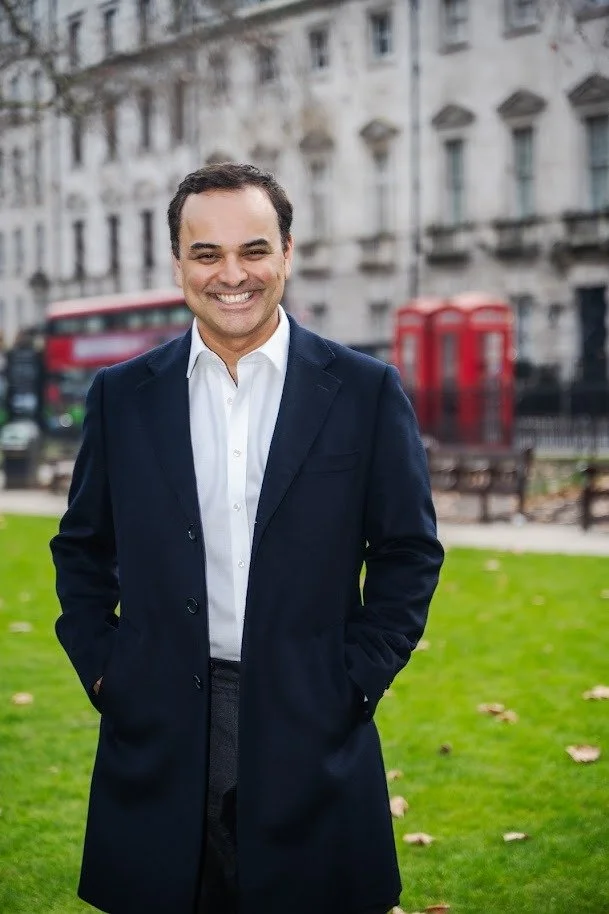
Its most prominent contemporary representative, Rayo De Alwis Withanage, is a financier and inventor who has built and led investment platforms representing more than US$15 billion in assets under management. His subsequent ventures across artificial intelligence, blockchain and sustainability have achieved a reported combined enterprise value exceeding US$1 billion.
.
Other Prominent De Alwis Family Members
The de Alwis family has produced a remarkable number of individuals who have contributed to Sri Lanka's intellectual, political, cultural, sporting, and scientific life over nearly two centuries. From pioneering scholars and legislators of the colonial era to national leaders, artists, broadcasters, athletes, and public servants, members of the family have played influential roles in shaping the country's development.
Their contributions span diverse fields including education, linguistics, parliamentary governance, mass communication, sports, fine arts, natural-history illustration, and public administration. Collectively, they represent a legacy of service and achievement that has left a lasting imprint on Sri Lankan society and beyond.
William C. de Alwis (1905–1985)
An internationally recognized botanical artist and illustrator whose work for the Singapore Botanic Gardens set new standards in scientific illustration. His paintings and drawings of tropical plants remain valued for their artistic excellence and scientific accuracy, contributing substantially to botanical research and the preservation of Southeast Asia’s horticultural heritage.
Neal de Alwis (1914–?)
A prominent socialist politician and Member of Parliament for the Lanka Sama Samaja Party (LSSP), holding deputy ministerial positions under the Bandaranaike government and contributing to the advancement of leftist politics in post-independence Sri Lanka.
Dr. Ananda Tissa de Alwis (1919–1996)
Served as a pioneer of national mass communication, Speaker of the Parliament, and Cabinet Minister of State, executing critical legislative reforms during the state's transition to the executive presidency.
Wardy de Alwis (1925– )
A distinguished member of the de Alwis family whose life has spanned a century of Sri Lankan history. Recognized as the oldest living alumnus of Trinity College, Kandy, he represents a generation closely associated with public service, civic leadership, and the enduring legacy of one of Sri Lanka’s notable families.
Susantha De Alwis (d. 2008)
A distinguished Sri Lankan diplomat and international civil servant who represented Sri Lanka at the highest levels of global diplomacy. A scholar of Royal College, Colombo, the University of Ceylon, and the University of Oxford, he served as Sri Lanka's Permanent Representative to the United Nations in Geneva, Ambassador to Japan and South Korea, and Ambassador to the United States. He also chaired the Coordinating Bureau of the Non-Aligned Movement and was elected Chairman of the International Telecommunications Satellite Organization (INTELSAT), reflecting his prominence in international affairs and multilateral diplomacy.
Lakshman de Alwis (1940–2008)
A highly respected athletics coach and sports administrator who shaped Sri Lankan track and field for decades, mentoring generations of athletes and helping establish modern standards for athletics development in Sri Lanka.
Premakeerthi de Alwis (1947–1989)
Sri Lanka’s most influential radio and television broadcaster of his era, an acclaimed lyricist, dramatist, and media personality whose creative contributions transformed Sinhala popular culture and broadcasting.
Guy de Alwis (1959–2013)
A pioneering national wicketkeeper for the Sri Lankan cricket team, representing the nation soon after it gained Test status and helping establish the foundations of Sri Lanka’s international cricket success.
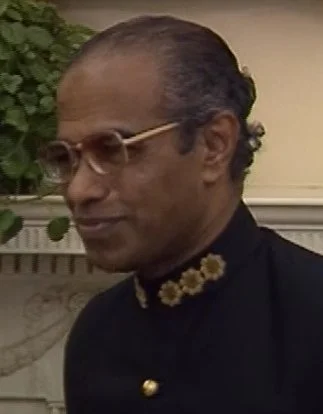
Susantha De Alwis, Sri Lankan ambassador to the U.S.
White House Television Office - YouTube: https://www.youtube.com/watch?v=gkbE3y-Bqfw – View/save archived versions on archive.org OR https://catalog.archives.gov/id/137878678
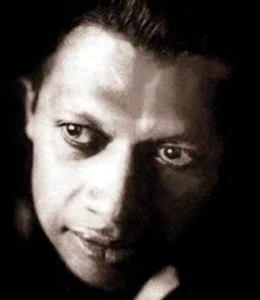
Premakeerthi de Alwis
Source: https://www.sundaytimes.lk/160731/magazine/the-butterfly-the-flower-and-child-202359.html
Guy de Alwis (Sri Lanka) at Lord's 1984. (Photo by Patrick Eagar/Popperfoto via Getty Images)